
Eating enough protein does not have to mean buying expensive supplements, imported foods, or eating chicken at every meal. In fact, some of the best high protein Indian meals can be made with simple foods already found in a normal Indian kitchen.
Eggs, dal, milk, curd, soy chunks, chicken, paneer, chana, rice and roti can all fit into a muscle-building diet. More importantly, these foods can be combined in ways that give you a solid amount of protein without turning your grocery bill into a monthly headache.
Whether you are trying to build muscle, gain weight, or simply eat better, the basic idea is simple: eat enough protein, get enough total calories, train consistently, and give your body time to recover.
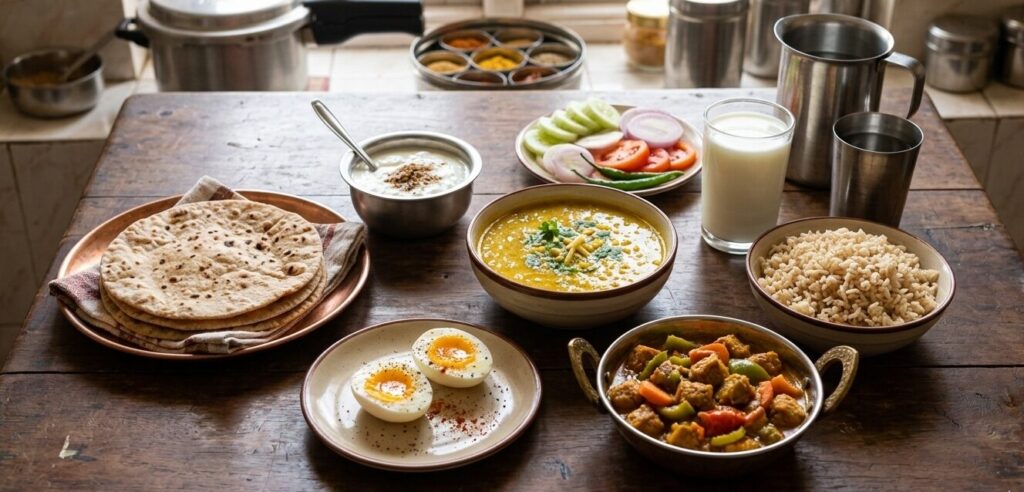
Why High Protein Indian Meals Can Be Affordable
Protein often gets a reputation for being expensive, but that is not always true. The cost of your diet depends heavily on the foods you choose and how you combine them.
For example, eggs, pulses, milk, soy products, curd and chana can provide useful amounts of protein without requiring a premium grocery budget. The ICMR-NIN Dietary Guidelines for Indians also identify pulses, eggs, milk, meat and soy-based foods as useful sources of protein in the Indian diet.
However, eating for muscle does not mean every meal needs an enormous serving of protein. A better approach is to spread your protein intake across the day and build meals around foods you can afford and consistently eat.
That is also why your regular kitchen can be more useful than a shelf full of expensive “fitness foods.” You do not need fancy ingredients when simple foods can do the job.
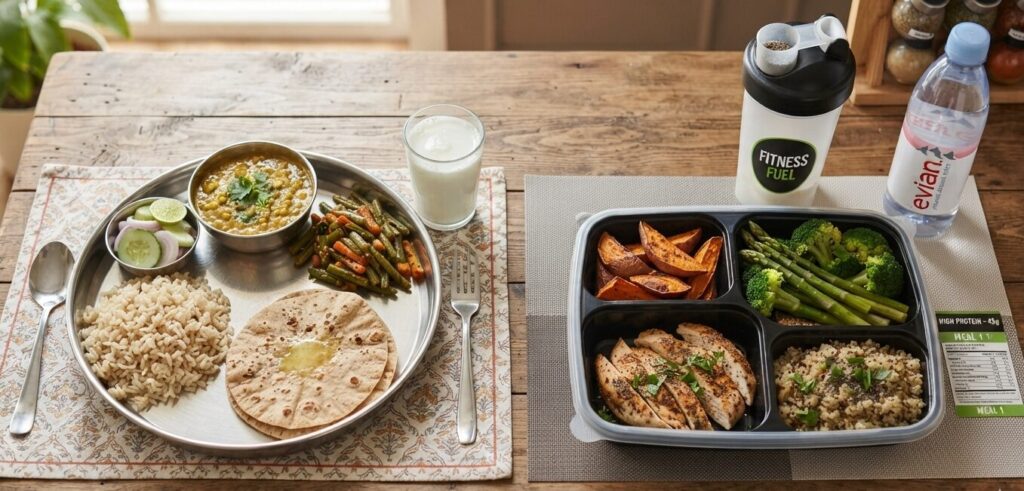
10 High Protein Indian Meals on a Real Budget
These meal ideas are based on familiar Indian foods and simple preparation. Protein amounts are approximate because portion sizes, brands and cooking methods can change the final numbers.
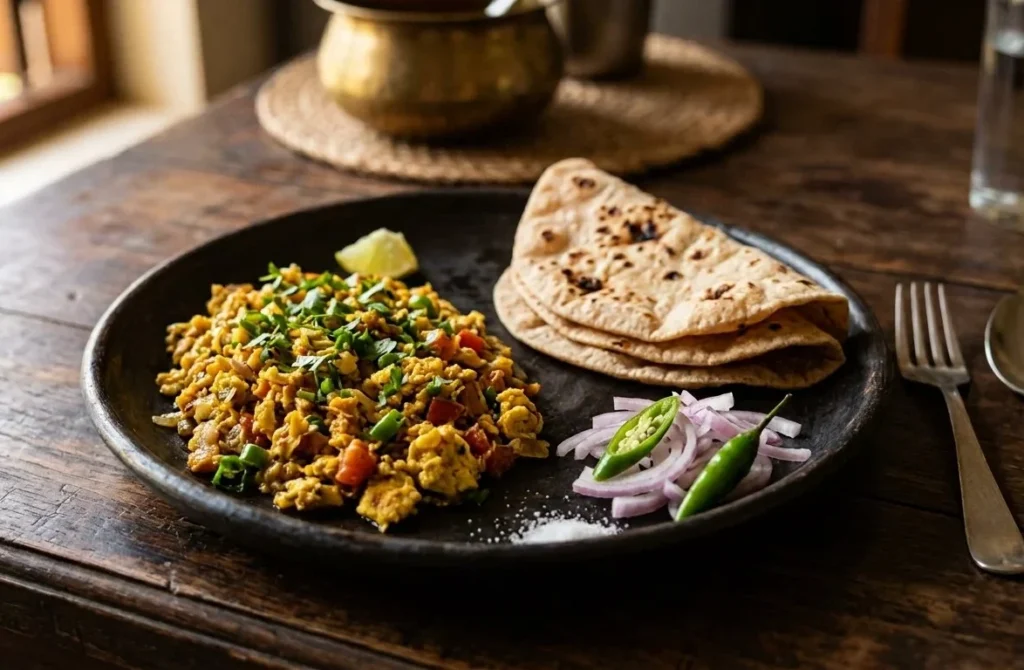
1. Egg Bhurji with Roti
Egg bhurji is one of the easiest high protein Indian meals you can make, and it takes very little time.
What you need:
- 4 whole eggs
- 1 onion
- 1 tomato
- Green chilli
- Coriander
- Spices
- 2 to 3 rotis
The Indian Food Composition Tables from ICMR-NIN list about 13.3 g of protein per 100 g of raw whole egg. Therefore, four eggs can contribute roughly 25 g or more of protein depending on their size.
For a higher-calorie meal during a bulk, add a glass of milk or another roti.
Estimated protein: Around 30 g or more with the rotis
Budget level: ₹
Best for: Breakfast or dinner
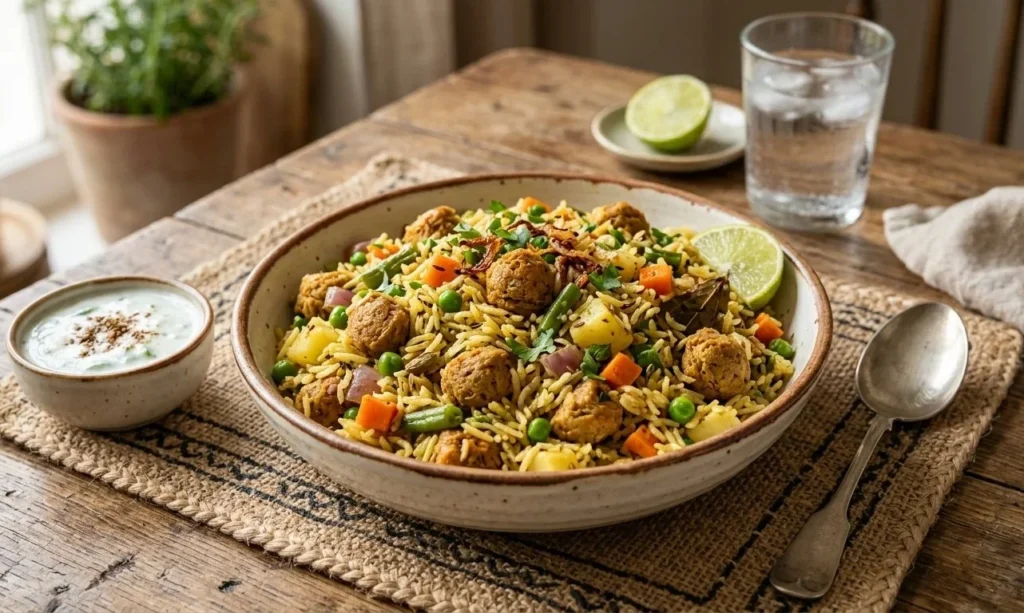
2. Soya Chunk Pulao
Soy chunks are a practical way to increase the protein content of a meal without spending heavily on meat.
What you need:
- 50 to 75 g dry soy chunks
- Rice
- Onion
- Tomato
- Peas or mixed vegetables
- Spices
Cook the soy chunks first, squeeze out the excess water, and then add them to your pulao. As a result, you get a filling meal with protein and carbohydrates using inexpensive ingredients.
You can also turn the same soy chunks into a curry, stir-fry or bhurji-style dish, so one ingredient can cover several meals.
Estimated protein: Roughly 25 to 40 g, depending on the amount of soy used
Budget level: ₹
Best for: Lunch or post-workout meal
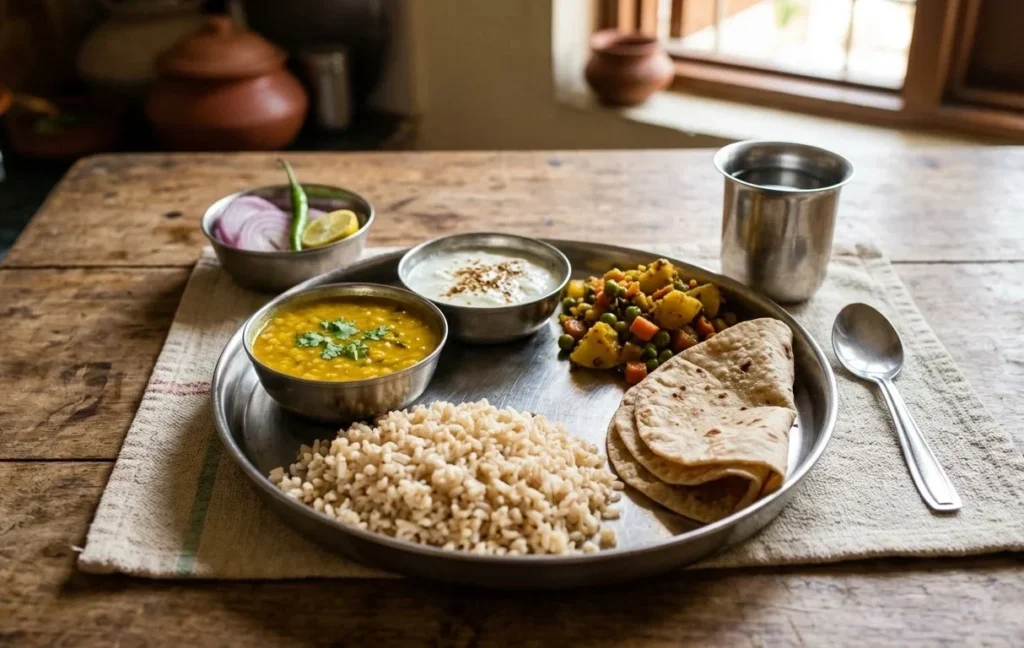
3. Dal, Rice and Curd
Do not underestimate dal.
A simple dal-rice combination can be an important part of an affordable muscle-building diet, especially when you pair it with another protein source.
Try:
- 1 large serving of dal
- Rice
- 200 to 250 g curd
- A side of vegetables
The ICMR-NIN Dietary Guidelines explain the importance of pulses in Indian diets and discuss cereal-pulse combinations as part of a balanced vegetarian diet.
Although dal may not provide as much protein as a large serving of chicken, the complete meal can still make a useful contribution to your daily protein intake.
Estimated protein: Roughly 20 to 30 g, depending on portions
Budget level: ₹
Best for: Lunch
4. Besan Chilla with Curd
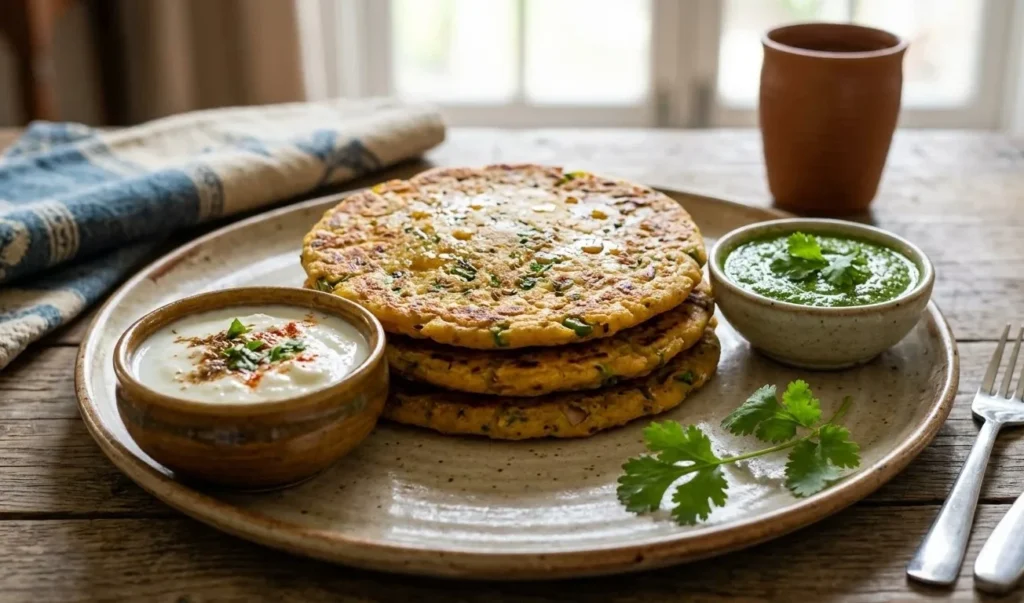
Besan chilla is another simple option that deserves more attention.
Mix besan with onion, tomato, green chilli, coriander and spices. Cook it like a savoury pancake and serve it with thick curd.
You can also add grated paneer or soy granules if you want to increase the protein further.
Because besan chilla is quick to prepare and works well for breakfast or an evening meal, it can become an easy part of your weekly routine.
Estimated protein: Roughly 20 to 30 g
Budget level: ₹
Best for: Breakfast or evening meal
5. Chicken Rice Bowl
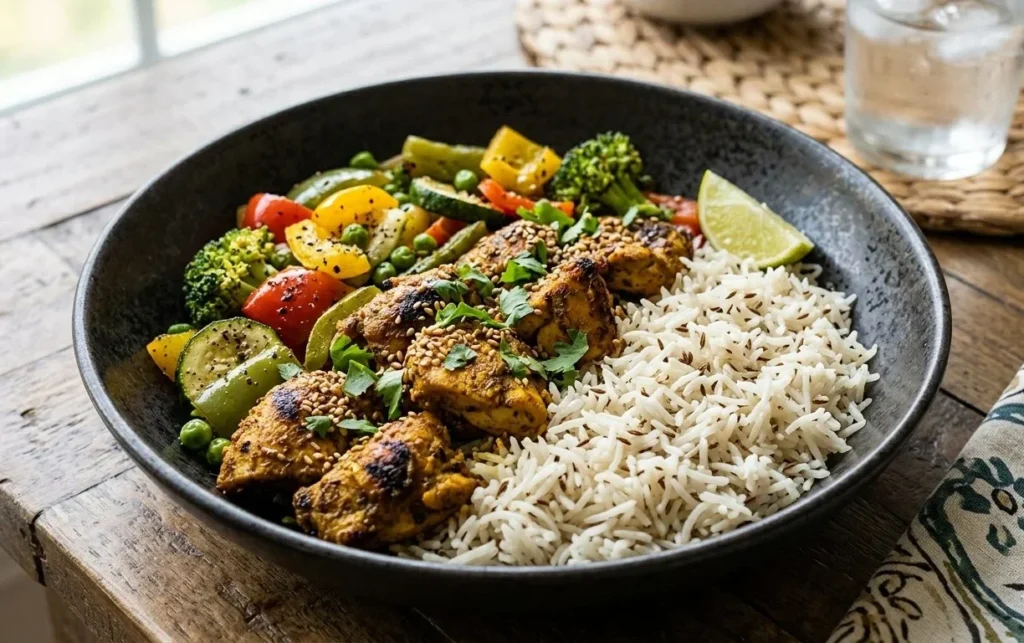
For non-vegetarians, chicken can make hitting a higher protein target much easier.
A simple chicken rice bowl does not need restaurant-style sauces or a long ingredient list.
What you need:
- 120 to 150 g cooked chicken
- Rice
- Onion and tomato
- Seasonal vegetables
- Spices
- A small amount of cooking oil
The Indian Food Composition Tables provide food-composition data for chicken and other commonly eaten Indian foods. You can use the ICMR-NIN Indian Food Composition Tables as a reference when planning your meals.
Therefore, a chicken and rice bowl can give you a substantial serving of protein while still being simple enough for everyday meal prep.
Estimated protein: Roughly 35 to 45 g
Budget level: ₹₹
Best for: Lunch or dinner
6. Paneer Bhurji with Roti
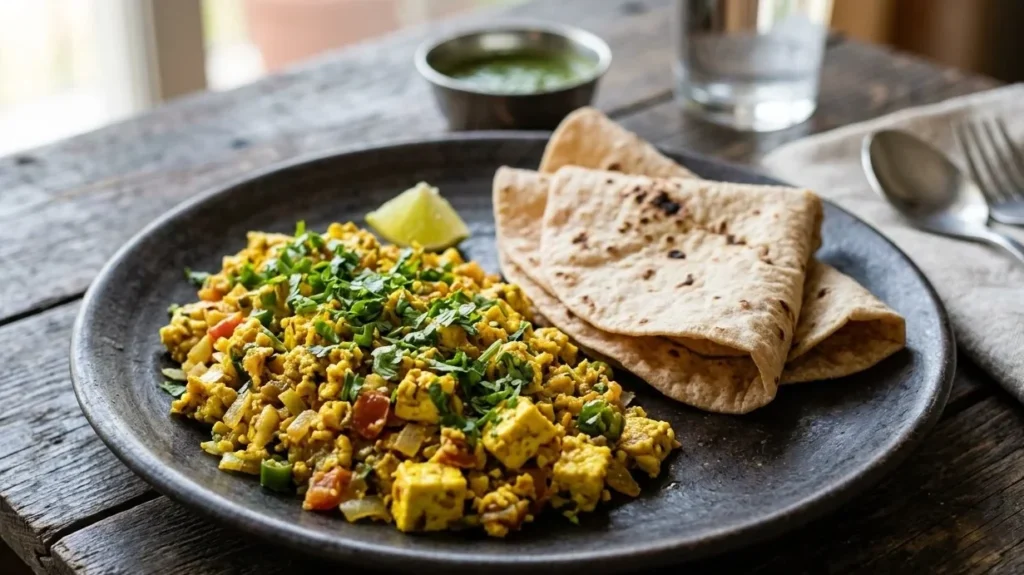
Paneer is convenient, filling and easy to cook. However, it is also more calorie-dense than some leaner protein choices.
According to the ICMR-NIN Indian Food Composition Tables, paneer provides a useful amount of protein along with a significant amount of fat.
That can make paneer especially useful when you are trying to gain weight and need more calories. On the other hand, portion control matters if you are trying to keep calories lower.
What you need:
- 100 to 150 g paneer
- Onion
- Tomato
- Capsicum
- Spices
- 2 rotis
Estimated protein: Roughly 20 to 30 g
Budget level: ₹₹
Best for: Dinner
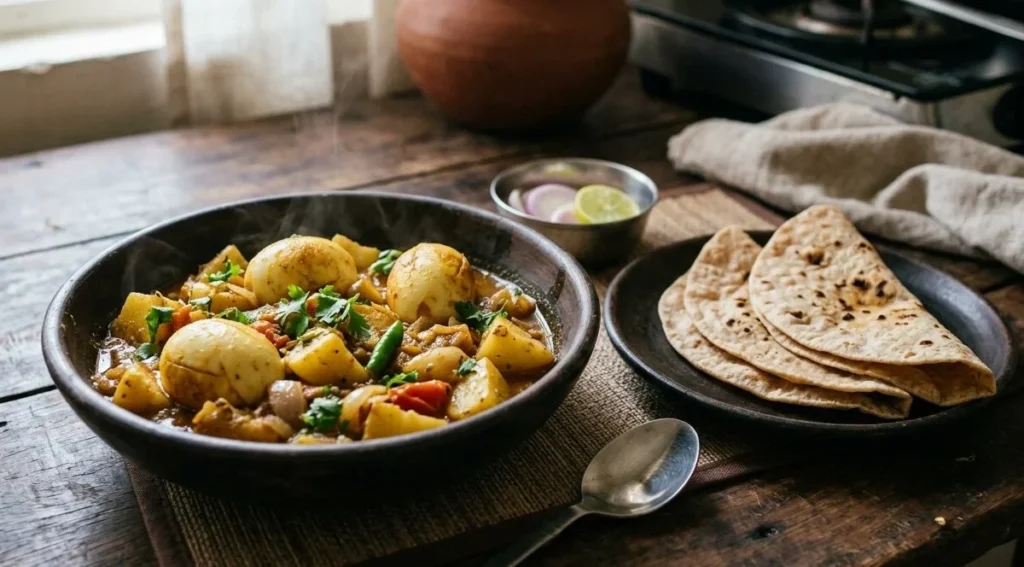
7. Egg and Potato Masala with Roti
Potatoes are not a major protein source, but that does not make them a bad bodybuilding food.
The trick is to combine them with a real protein source.
Try:
- 3 to 4 eggs
- Boiled potatoes
- Onion
- Tomato
- Spices
- 2 rotis
This gives you protein from the eggs and carbohydrates from the potatoes and roti. As a result, it can be a cheap and filling option for someone trying to gain weight.
Estimated protein: Roughly 25 to 30 g
Budget level: ₹
Best for: Lunch or dinner
8. Chana Chaat with Curd
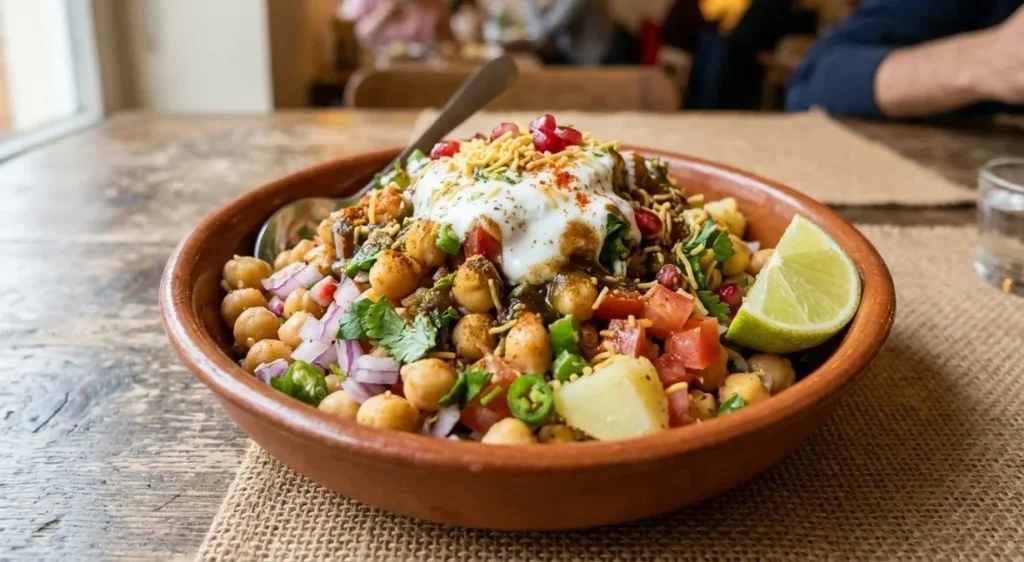
Chana is another practical pantry food.
Make a simple chana chaat using boiled chana, onion, tomato, coriander, lemon and spices. Then add curd on top.
You can also add a small amount of roasted peanuts when you need more calories. However, peanuts are better treated as an additional food rather than your only protein source.
Estimated protein: Roughly 18 to 25 g
Budget level: ₹
Best for: Snack or light meal
9. Milk, Banana and Roasted Chana
Sometimes the simplest meal wins.
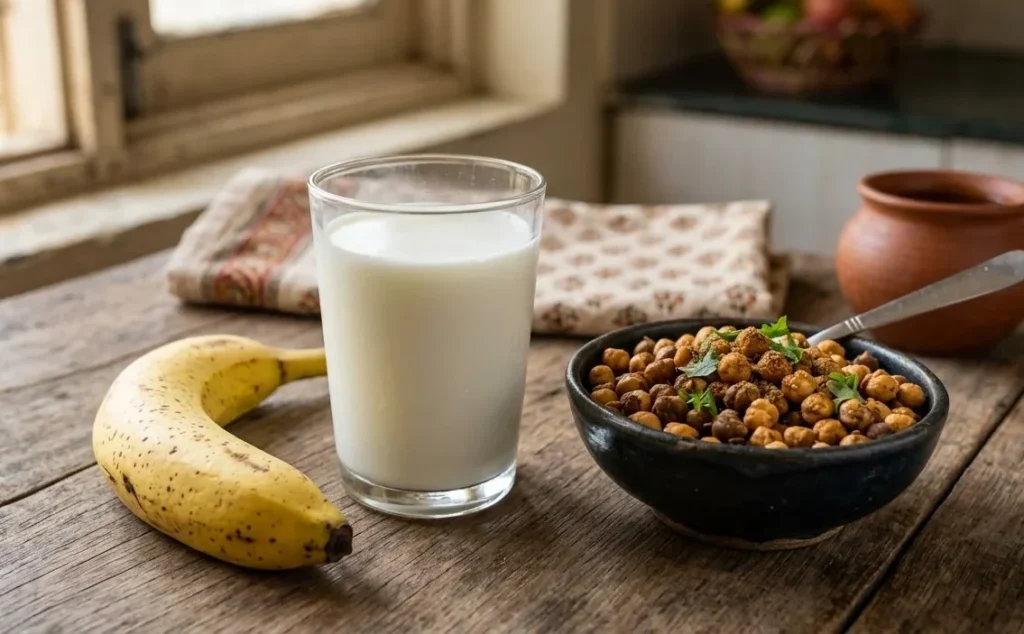
Combine:
- 400 to 500 ml milk
- 1 banana
- 50 to 75 g roasted chana
This works well as a quick snack between meals or after training.
Milk provides protein along with carbohydrates and other nutrients, while roasted chana adds another useful protein source. Therefore, the combination can be a convenient way to add both calories and protein without cooking a full meal.
Estimated protein: Roughly 20 to 25 g
Budget level: ₹
Best for: Snack or post-workout
10. Dal Paratha with Curd and Eggs
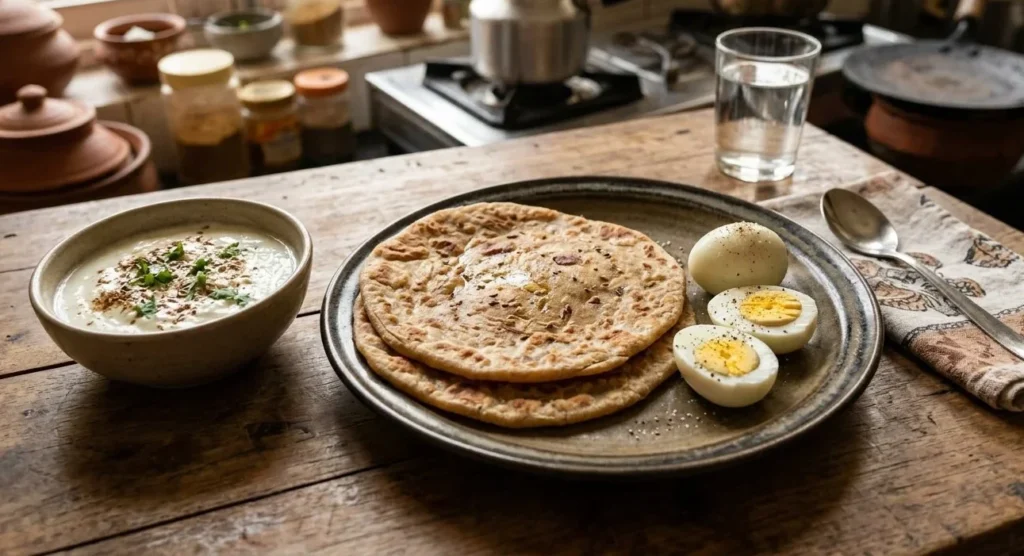
Want something that feels like normal Indian home food instead of a “fitness meal”?
Try dal stuffed paratha with curd and two boiled eggs.
The dal provides plant protein and fibre, while the eggs add another protein source. Also, the paratha and curd make the meal more filling.
This is a good example of how you can modify familiar Indian food instead of completely changing your diet.
Estimated protein: Roughly 25 to 35 g depending on ingredients and portions
Budget level: ₹₹
Best for: Breakfast, lunch or dinner
High Protein Indian Meals: Budget Protein Staples to Keep at Home
You do not need a huge supplement shelf to eat enough protein.
Instead, keep a few reliable foods at home and build different meals around them.
| Food | Why it helps | Easy ways to use it |
|---|---|---|
| Eggs | Convenient protein source | Bhurji, omelette, boiled eggs |
| Dal | Protein, carbohydrates and fibre | Dal rice, dal roti |
| Soy chunks | Protein-dense and versatile | Pulao, curry, bhurji |
| Milk | Protein and calories | Drinks, oats, shakes |
| Curd | Easy addition to meals | With rice, roti or chilla |
| Chana | Filling and versatile | Chaat, curry, snacks |
| Paneer | Protein plus calories | Bhurji, curry, wraps |
| Chicken | Protein-dense food | Rice bowls, curry, wraps |
| Rice | Affordable carbohydrate source | Pair with dal, eggs or chicken |
| Atta | Easy carbohydrate base | Roti, paratha, cheela |
Food prices change over time and can vary between locations. The Department of Consumer Affairs price-monitoring division tracks daily prices for several commonly used food commodities, so use current local prices when calculating the cost of your own meals.
How to Build a High Protein Indian Meal
You do not need a complicated meal plan.
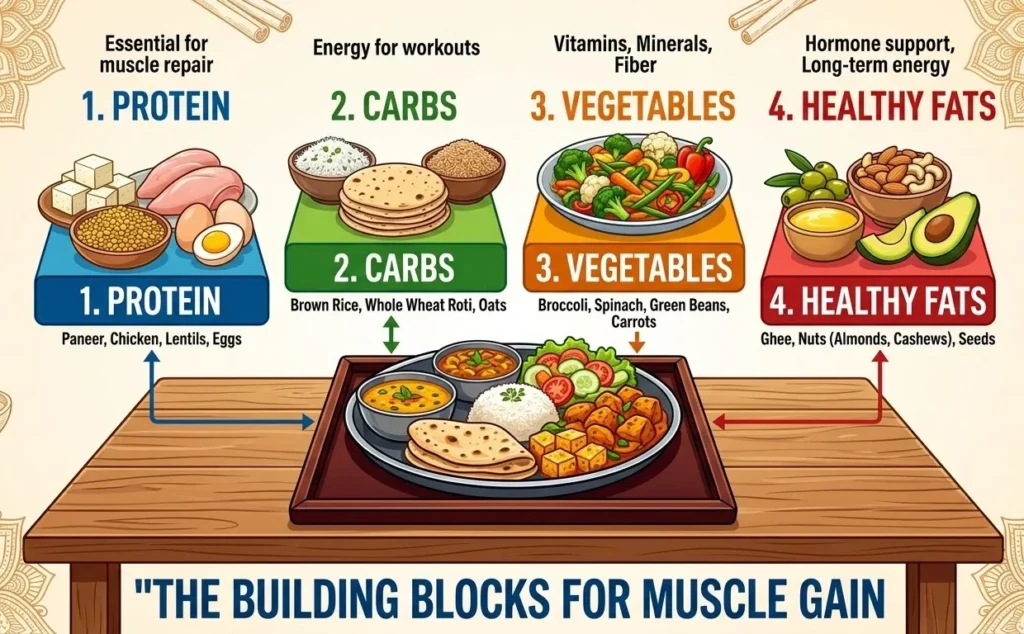
Instead, build your plate around three basic components.
1. Choose a main protein source
Start with eggs, chicken, soy chunks, paneer, dal, chana, milk or curd.
2. Add a carbohydrate source
Use rice, roti, potatoes, oats, poha or another grain depending on the meal.
3. Add vegetables and flavour
Onion, tomato, spinach, carrot, cucumber, capsicum and seasonal vegetables can make your meal more satisfying.
For example, an easy lunch could be chicken, rice, vegetables and curd. A vegetarian version could be soy chunks, rice, vegetables and curd.
Also, remember that your whole day’s diet matters more than one perfect meal.
For people who train for muscle growth, research has found that increasing protein intake can support gains in lean mass and strength during resistance training. A large meta-analysis published in the British Journal of Sports Medicine found that benefits generally levelled off at around 1.6 g of protein per kilogram of body weight per day in the studies analysed. You can read the full research review on PubMed.
That does not mean everyone must eat exactly 1.6 g/kg every day. Your needs can vary based on your body size, training, total diet and goals.
A One-Day High Protein Indian Meal Plan on a Budget
Here is a practical example of how you could structure a day using normal Indian foods.
Breakfast
4 eggs + 3 rotis + fruit
Lunch
Dal + rice + curd + vegetables
Evening snack
Milk + banana + roasted chana
Dinner
Soy chunk pulao + vegetables + curd
Optional extra
2 boiled eggs or a glass of milk if you need more food
This is not a universal meal plan. Instead, think of it as a template that you can adjust according to your appetite, budget and goals.
If your goal is to gain muscle, your training matters too. For a complete beginner-friendly workout structure, check out our Beginner Strength Training Routine and pair your training with a consistent nutrition plan.
How Much Protein Do You Actually Need?
More protein is not automatically better.
A practical starting point for someone who regularly trains can be around 1.6 g of protein per kilogram of body weight per day, with individual needs varying depending on the person and goal.
For example, someone weighing 70 kg could use around 110 g of protein as a practical starting target. Someone weighing 80 kg could aim for around 125 to 130 g.
The exact number does not need to be perfect every single day. Consistency matters more than obsessing over every gram.
Also, remember that your training creates the stimulus, while your food and recovery support the process.
Our Muscle Building Tips for Beginners guide covers training principles, progressive overload, realistic bulking and recovery in more detail.
How Much Protein Do You Need?
Enter your body weight to estimate a practical daily protein target for muscle building.
This is a general estimate for people doing resistance training. Individual protein needs can vary depending on your training, diet, body composition and goals.
Common Mistakes When Eating High Protein Indian Meals
Mistake 1: Buying supplements before fixing your meals
Protein powder can be convenient, but it is not a requirement for building muscle.
In fact, the ICMR-NIN Dietary Guidelines focus on balanced food intake and note that simply consuming protein supplements on top of an already adequate diet does not automatically mean more muscle growth.
Therefore, fix your everyday meals first.
Mistake 2: Eating only protein
Protein matters, but so do carbohydrates, fats, fruits and vegetables.
For example, rice and roti can support your energy intake, while vegetables and fruit provide fibre and other nutrients.
Mistake 3: Making every meal expensive
Chicken breast, whey protein, premium cereals and speciality foods can add up quickly.
However, eggs, dal, soy chunks, milk, curd and chana can provide practical protein options at a much lower cost.
Mistake 4: Chasing huge protein numbers
More protein is not automatically better.
A sensible daily target that fits your body, training and total diet is more useful than forcing enormous amounts of protein into every meal.
Mistake 5: Ignoring calories when bulking
If your goal is muscle gain and you consistently eat too little, high protein alone will not solve the problem.
Therefore, make sure your total food intake supports your goal while keeping your meals nutritious and sustainable.
FAQ About High Protein Indian Meals
What are the cheapest high protein foods in India?
Eggs, dal, soy chunks, chana, milk and curd are practical budget-friendly options. However, the cheapest choice can vary depending on your city, shop and current food prices.
Can vegetarian Indian meals provide enough protein?
Yes. A varied vegetarian diet can provide substantial protein through pulses, soy, dairy, grains, nuts and seeds. The ICMR-NIN Dietary Guidelines also discuss pulses and cereal-pulse combinations as useful parts of vegetarian diets.
Is dal enough protein for muscle building?
Dal is useful, but it is usually better to combine it with other protein sources and enough total food. For example, dal with curd, milk, eggs or soy can make the overall meal more protein-rich.
Are eggs good for muscle building?
Yes. Eggs are a convenient protein source containing all nine essential amino acids. Their exact protein content depends on size, but the Indian Food Composition Tables can be used as a reference for food-composition values.
Can I build muscle without protein powder?
Yes. Protein powder is a convenient food, not a requirement. A balanced diet based on normal foods can provide plenty of protein when meals are planned properly.
What should I eat if I am bulking on a low budget?
Build meals around affordable protein sources such as eggs, dal, soy chunks, milk, curd and chana. Then add rice, roti, potatoes or other carbohydrate sources to increase your total calorie intake.
Final Takeaway
Building muscle on a budget is not about finding the most expensive food in the supermarket.
It is about finding foods you can afford, preparing them consistently, eating enough overall, and sticking with the plan long enough to see results.
High protein Indian meals can be incredibly simple: egg bhurji and roti, dal and rice with curd, soy chunk pulao, chicken rice, paneer bhurji, chana chaat or even milk with roasted chana.
The best meal is not the one with the fanciest ingredients. It is the one you can afford, enjoy and repeat consistently.
So before you spend money on another expensive “fitness food,” look at your own kitchen first. There is probably more muscle-building potential sitting in your dal container, egg tray and rice bag than you think.
One Response