
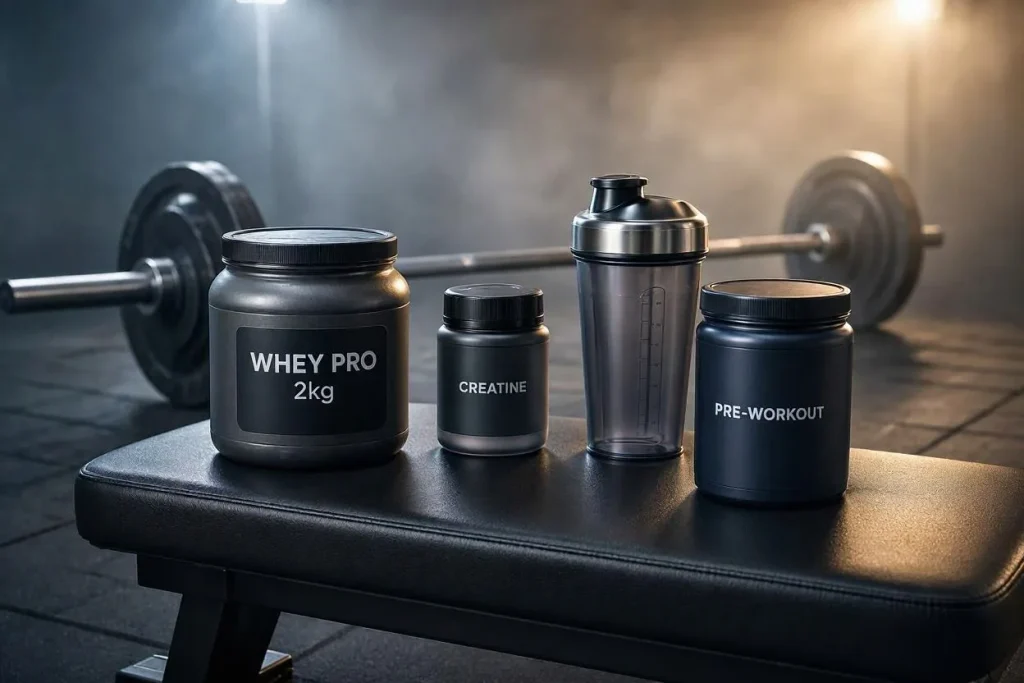
Walk into any gym supplement store and you can quickly end up staring at dozens of tubs, powders and brightly coloured pre-workout bottles.
Whey protein promises more protein. Creatine promises better strength and performance. Pre-workout promises energy, focus and a harder session.
So what should you actually buy?
The answer is simpler than the supplement shelf makes it look.
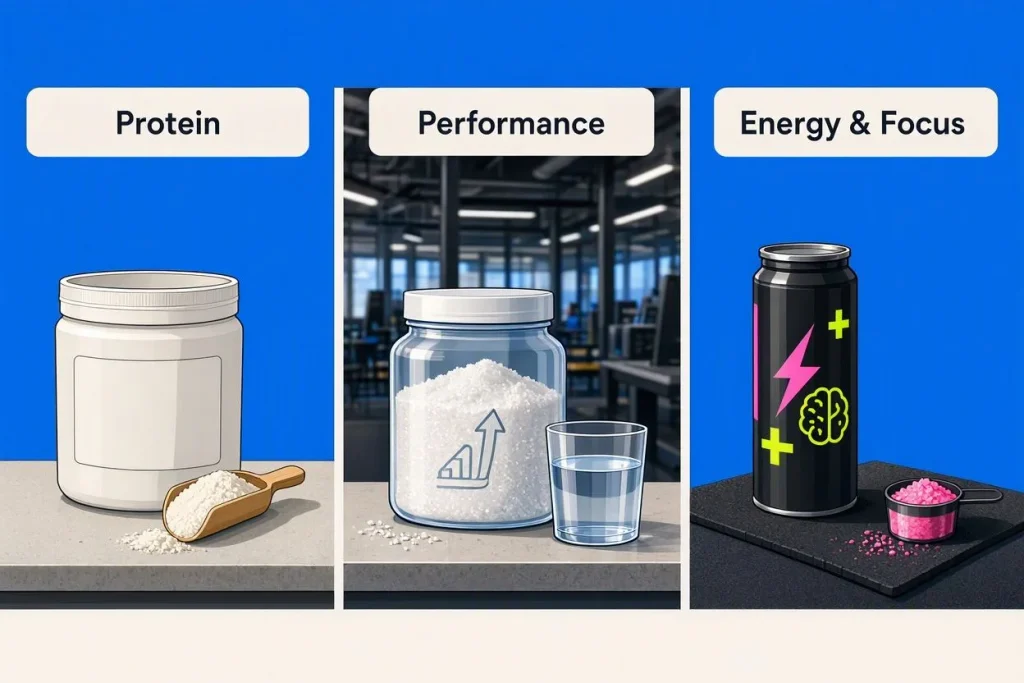
Whey protein helps you reach your protein intake. Creatine monohydrate can improve high-intensity exercise performance and training adaptations. Pre-workout is mainly a convenience product built around ingredients such as caffeine, and it is optional for most people.
This guide breaks down whey, creatine and pre-workout without the usual supplement-store sales pitch.
Do You Actually Need Supplements?
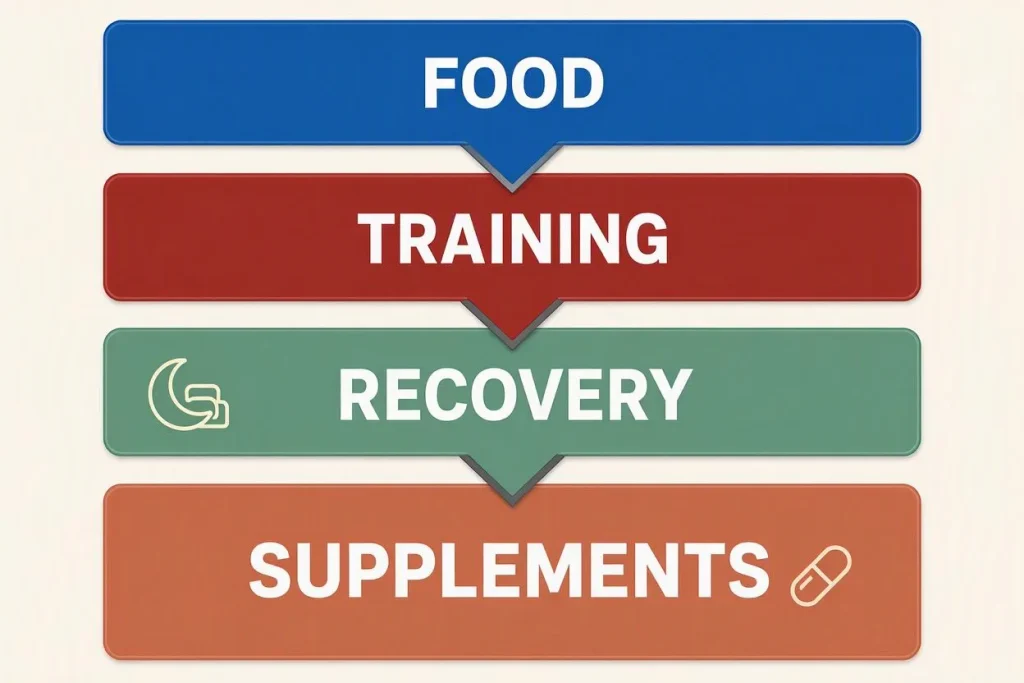
Before buying anything, fix the basics.
A well-planned diet, progressive resistance training, sufficient sleep and consistent calories do more for your progress than a cupboard full of supplements. In fact, active people can often meet their protein needs through regular foods, although protein supplements can be a convenient option when food alone is difficult to manage. (ISSN protein position stand)
That is why supplements should fill a gap rather than replace your foundation.
For example, if your meals already provide enough protein, whey may simply be unnecessary. If you already eat enough protein and want a supplement with strong evidence for improving training performance, creatine is a different category. Meanwhile, a pre-workout may make a session feel more energetic, but you can train perfectly well without it.
Whey, Creatine and Pre-Workout: What Does Each One Do?
The easiest way to understand these products is to stop thinking of them as three versions of the same thing.
Whey Protein
Whey is simply a convenient source of high-quality protein derived from milk.
Its main job is straightforward: help you consume enough protein.
Research and sports-nutrition guidance commonly put protein intake for exercising individuals around 1.4–2.0 g per kilogram of body weight per day, although the appropriate amount depends on the person and goal. (ISSN protein position stand)
Therefore, whey is most useful when your normal meals are not getting you to your target.
It is not magic, and it does not build more muscle simply because it came from a shaker instead of a plate.
For a quick estimate of your daily protein target, you can also use the SUPERASTIK Protein Intake Calculator.
Creatine Monohydrate
Creatine works differently.
Instead of simply supplying dietary protein, creatine increases the amount of stored creatine available in muscle, which can support repeated high-intensity efforts such as resistance training. Research has consistently found benefits for high-intensity exercise performance and lean-mass gains when creatine is combined with training. (ISSN creatine position stand)
The form with the strongest evidence is creatine monohydrate.
A common maintenance approach is 3–5 g per day. A loading phase can increase muscle creatine stores more quickly, but it is not required. Taking a smaller daily amount consistently also works over time. (ISSN creatine position stand)
Pre-Workout
Pre-workout is not one ingredient.
It is usually a mixture of ingredients designed to improve energy, focus, performance or the feeling of a more intense workout.
Caffeine is one of the most studied ingredients, and evidence supports benefits for several forms of exercise performance. (umbrella review of caffeine research)
Other pre-workout formulas may contain ingredients such as beta-alanine, citrulline or creatine. The important point is that the quality of a pre-workout depends heavily on its actual ingredients and doses, not the artwork on the tub.
Whey Protein: When Does It Make Sense?
Whey makes the most sense when convenience is the problem.
Imagine you need another 25–30 g of protein but you are rushing to college, work or the gym. Cooking another full meal may not be practical. A protein shake takes minutes.
Whey Concentrate vs Whey Isolate
The two common options you will see are whey concentrate and whey isolate.
Whey concentrate generally keeps more of the milk’s natural components and is often cheaper.
Whey isolate undergoes additional processing and usually contains a higher percentage of protein with less lactose and fat.
That does not automatically make isolate “better” for building muscle. Instead, the right choice depends on your budget, digestion and nutritional needs.
How to Use Whey
Treat whey like food.
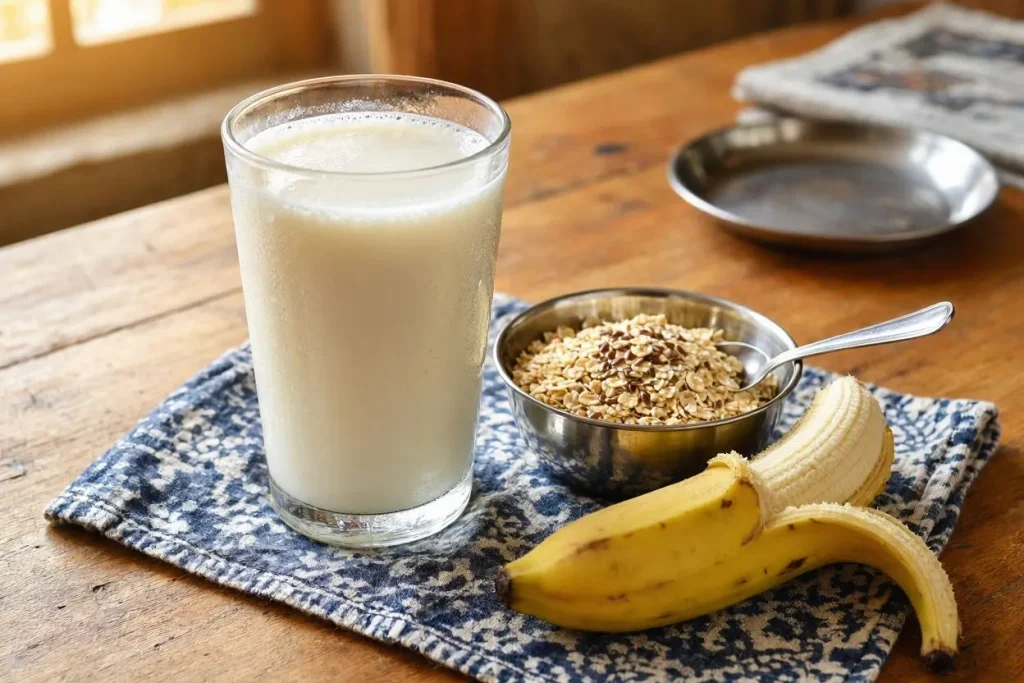
You can mix it with water or milk, add it to oats, blend it with a banana, or use it in a homemade shake.
The important thing is your total daily protein intake, not whether you drank your shake exactly 30 minutes after training.
For more practical Indian meal ideas, check out High Protein Indian Meals on a Budget.
Creatine Monohydrate: The Simple Guide
Creatine has been researched for decades, and it remains one of the best-studied sports supplements.
The simplest approach is also the easiest:
Take 3–5 g of creatine monohydrate every day.
You do not have to take it only before training. You also do not need to create a complicated cycling schedule.
Creatine works by gradually increasing muscle creatine stores, so daily consistency matters more than perfect timing. (ISSN creatine position stand)
Does Creatine Make You Gain Fat?
Creatine can increase body weight, particularly early in supplementation, because muscles can hold more water when creatine stores increase.
That is not the same thing as gaining body fat.
Is Creatine a Steroid?
No.
Creatine is a naturally occurring compound found in the body and in foods such as meat and fish. It is not an anabolic steroid.
Does Creatine Need to Be Cycled?
A cycling routine is not required for the standard use of creatine monohydrate. Consistent daily intake is the simpler approach.
For a beginner-friendly look at the training side of muscle growth, see our Muscle Building Tips for Beginners.
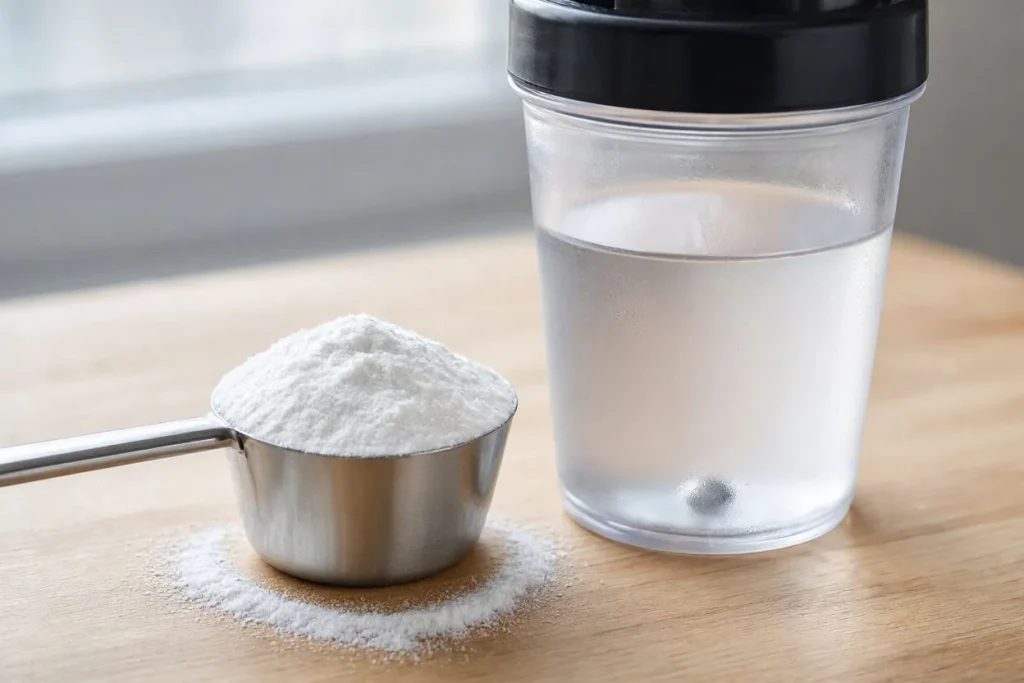
Pre-Workout: What Is Actually Inside It?
This is where things get more complicated.
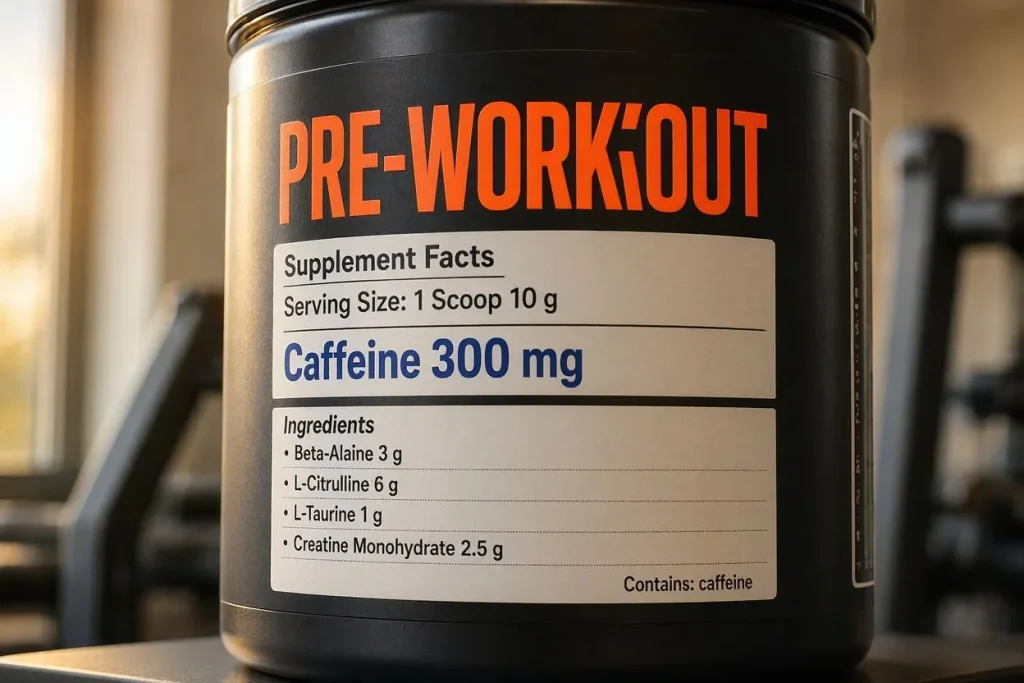
Some pre-workouts are little more than caffeine and flavouring. Others contain long ingredient lists with several stimulants and performance compounds.
Caffeine
Caffeine is the ingredient you should pay the most attention to.
A large review of meta-analyses found that caffeine can improve several aspects of exercise performance, including endurance, strength, muscular endurance and power. However, the size of the effect varies between people and types of exercise. (caffeine umbrella review)
The FDA cites 400 mg of caffeine per day as an amount not generally associated with negative effects for most healthy adults, but sensitivity varies, and that number should not be treated as a personal target. (FDA caffeine guidance)
Also remember that caffeine can come from coffee, tea, energy drinks and other products. Therefore, your total daily caffeine intake matters, not just the amount in your pre-workout.
Beta-Alanine
Beta-alanine is commonly included in pre-workout formulas and is associated with increased muscle carnosine levels.
One thing to know is the tingling sensation some people experience. That feeling is called paresthesia and is not a reliable measure of whether a product is “working.”
Citrulline
Citrulline is another common ingredient used in pre-workout products. It is often included because of its potential effects on blood flow and exercise performance.
However, evidence for individual pre-workout ingredients is not equally strong, and formulas vary widely.
Proprietary Blends
Be careful with products that hide their ingredient amounts behind a “proprietary blend.”
A label listing ten ingredients without showing how much of each one you are getting makes it much harder to judge the product.
Whey, Creatine and Pre-Workout: Can You Take Them Together?
Yes, they can fit into the same overall routine.
There is no requirement to separate whey and creatine. You could even mix creatine into your whey shake if that makes daily use easier.
Pre-workout is different because many products contain caffeine or other stimulants. Therefore, pay attention to when you take it and how much total caffeine you consume during the day.
Research examining creatine and caffeine together has found mixed results across different supplementation protocols rather than showing a simple universal rule that the two cannot be combined. (systematic review on creatine and caffeine)
The practical takeaway is simple: you do not need three separate “supplement moments” just because you own three tubs.

Which Supplement Should You Choose First?
This depends on what your diet and training are currently missing.
Choose Whey If Your Protein Intake Is Low
Food should remain your first option, but whey can make reaching your protein target much easier.
It is particularly useful for students, busy professionals, people with low appetites, or anyone who struggles to get enough protein from regular meals.
Choose Creatine If Your Protein Intake Is Already Covered
Creatine is not a substitute for protein.
Instead, it is a performance-focused supplement that can complement a good resistance-training and nutrition routine. A standard 3–5 g/day of creatine monohydrate is the simple approach supported by sports-nutrition literature. (ISSN creatine position stand)
Choose Pre-Workout If You Specifically Want a Stimulant-Based Boost
Pre-workout is optional.
If coffee already gives you enough energy to train well, you may not gain much from buying another caffeine product. On the other hand, some people like the convenience of a measured dose and additional ingredients.
However, needing a huge stimulant dose just to get through every workout is worth reconsidering.
How to Choose Supplements in India
Buying the right supplement is not only about comparing flavours and prices.
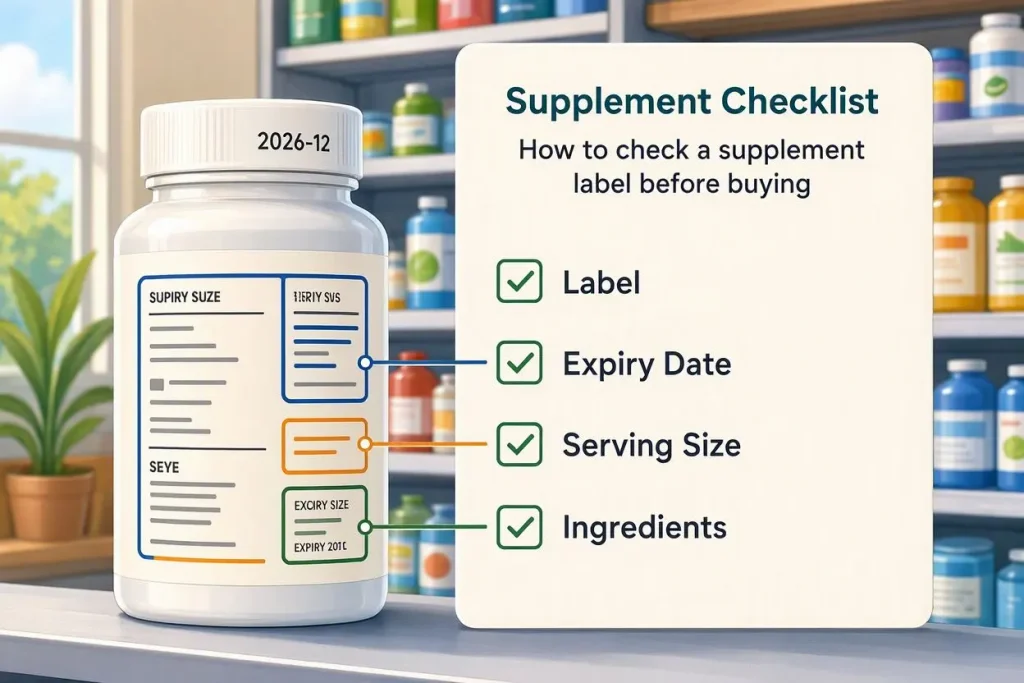
Look at the label first.
FSSAI regulates health supplements and nutraceuticals under India’s food-safety framework, including requirements relating to these products and their presentation. You can check the FSSAI health supplements standards for the official regulatory framework.
Before buying, check:
- Ingredient list
- Serving size
- Protein or active ingredient amount
- Caffeine amount
- Batch and expiry information
- Manufacturer details
- Sealed packaging
- Seller reputation
Also, avoid products making ridiculous claims such as instant muscle gain, guaranteed fat loss or steroid-like results.
A supplement should have a boring job description.
If the tub promises to transform your body in seven days, put the tub back on the shelf.
Common Supplement Mistakes Beginners Make
Buying Too Many Supplements
One whey, one creatine and one pre-workout can quickly become five tubs of confusion.
Start with the actual problem you are trying to solve.
Taking More Because More Seems Better
More is not automatically more effective.
That is especially important with stimulant-based products. High doses can increase the chance of unwanted effects, and individual sensitivity varies. (FDA caffeine guidance)
Ignoring Your Diet
A protein shake cannot rescue a poor diet.
If you are trying to gain muscle, the fundamentals still matter: enough calories, sufficient protein, quality training and recovery.
Our Beginner Strength Training Routine can help with the training side while your nutrition handles the other half of the equation.
Chasing the “Best” Brand
There is rarely one universally best supplement brand for everyone.
Instead, compare the label, ingredient amounts, price per serving, manufacturing information and seller reliability.
Whey, Creatine and Pre-Workout: Quick Comparison
| Supplement | Main purpose | Do you need it? | Typical use |
|---|---|---|---|
| Whey protein | Helps meet protein needs | Optional | When food protein is inconvenient |
| Creatine monohydrate | Supports high-intensity exercise performance | Optional but well-supported | 3–5 g daily |
| Pre-workout | Energy, alertness and selected performance effects | Optional | Usually before training |
| Caffeine | Stimulation and performance support | Optional | Depends on total daily intake |
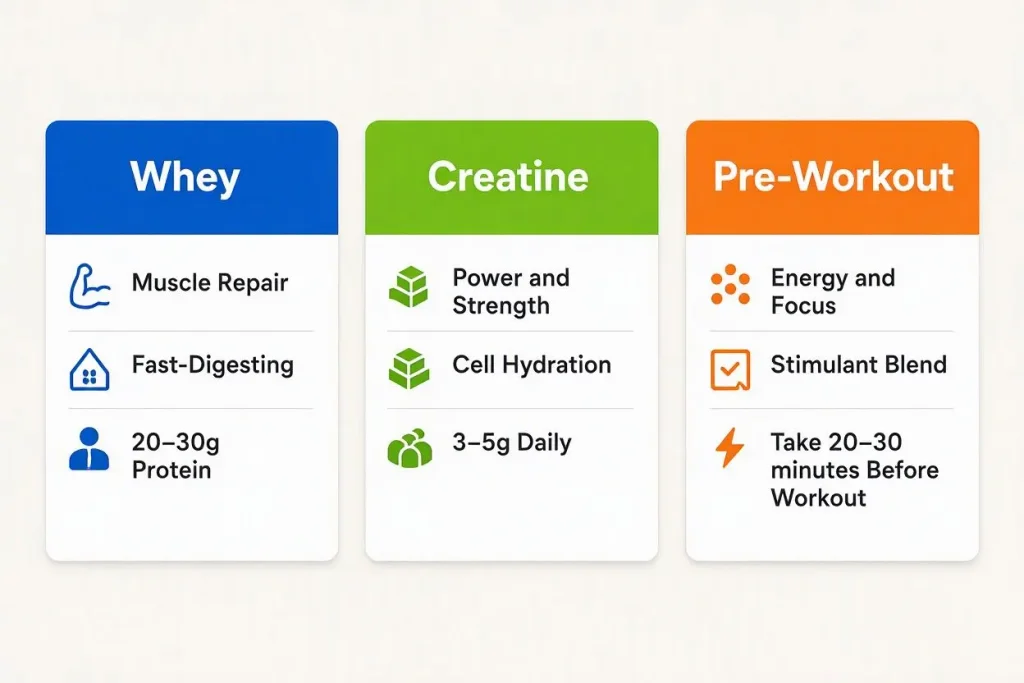
The biggest difference is that whey solves a nutrition problem, creatine supports training performance, and pre-workout mainly provides a temporary performance or energy boost.
FAQ About Gym Supplements
Is whey protein necessary for muscle growth?
No. You can get protein from normal foods. Whey is simply a convenient way to increase protein intake when regular meals are not enough.
How much creatine should I take?
A common maintenance amount is 3–5 g of creatine monohydrate per day. A loading phase is optional rather than mandatory. (ISSN creatine position stand)
Should I take creatine before or after my workout?
Daily consistency is more important than choosing a perfect minute around your workout. Take it at a time you can stick to.
Is pre-workout necessary for beginners?
No. Beginners can make excellent progress without pre-workout. A good training routine, sufficient food and recovery should come first.
Can I mix whey and creatine?
Yes. Mixing creatine with a whey shake is a convenient way to take both.
Is coffee the same as pre-workout?
Not exactly. Coffee provides caffeine, while a pre-workout may contain caffeine plus other ingredients. However, caffeine is one of the main reasons many pre-workouts can make you feel more alert or energized.
Can I take pre-workout every day?
You do not need to. Because many pre-workouts contain caffeine and other stimulants, daily use should be based on your tolerance, total caffeine intake and the product’s label directions.
Are supplements safe for everyone?
No supplement is automatically appropriate for every person. People with medical conditions, those taking medications, or anyone who is pregnant or otherwise has specific health concerns should discuss supplement use with a qualified healthcare professional.
Final Takeaway
Supplements are tools, not shortcuts.
Whey protein can make it easier to hit your daily protein target. Creatine monohydrate can support high-intensity training and is one of the better-supported sports supplements. Pre-workout can provide energy and focus, mainly through ingredients such as caffeine, but it is not a requirement for making progress. (ISSN protein position stand; ISSN creatine position stand; caffeine umbrella review)
Therefore, build the foundation first.
Train hard. Eat enough. Get your protein. Sleep properly. Then use supplements to fill whatever gap remains.
You do not need a kitchen full of tubs to build a strong body.
You need a plan you can actually follow.