
You’ve got the training principles down — progressive overload, compound lifts, protein. But if you’re still confused about how to actually structure your week, or worried your form is holding you back, this is where a solid beginner strength training routine comes together. Let’s fix that.
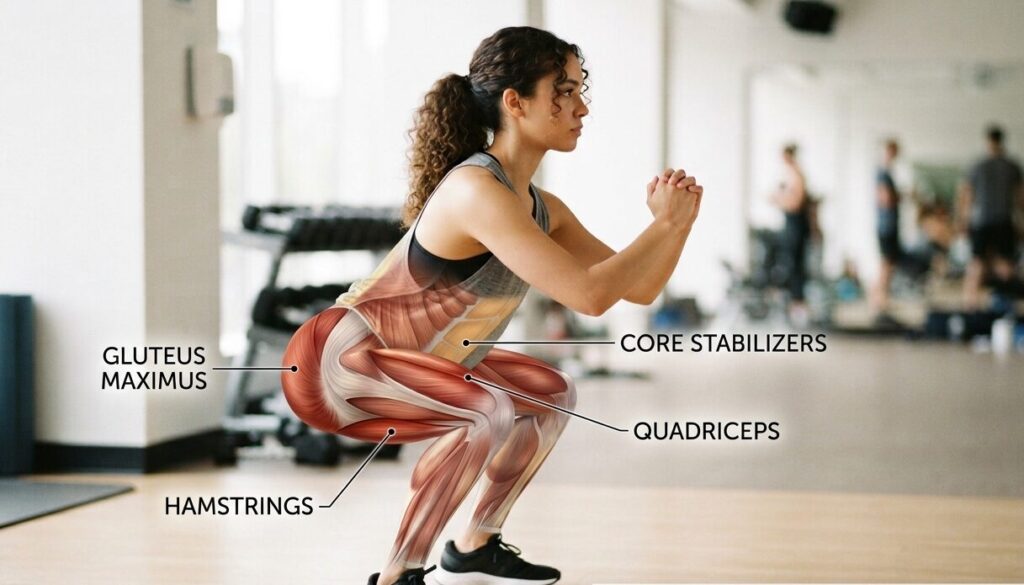
Full-Body vs. Split Routine: Which Should Beginners Use?
Why Full-Body Wins Early On
Here’s something most beginners get wrong before they even start: jumping straight into a bodybuilder-style split. A full-body session trains your whole body each time, letting you practice every movement more often and build good form faster. Splits — where you train one area per day, like a dedicated leg day — work better for experienced lifters training five or six days a week.
With two or three full-body sessions a week, each muscle group gets trained two to three times, which is enough stimulus and recovery for someone just starting out. Splits can wait until the basics feel automatic.
Your First Beginner Strength Training Routine
A simple, proven approach: pick one exercise from each movement pattern below, and do 2-3 sets of 8-12 reps, twice a week.
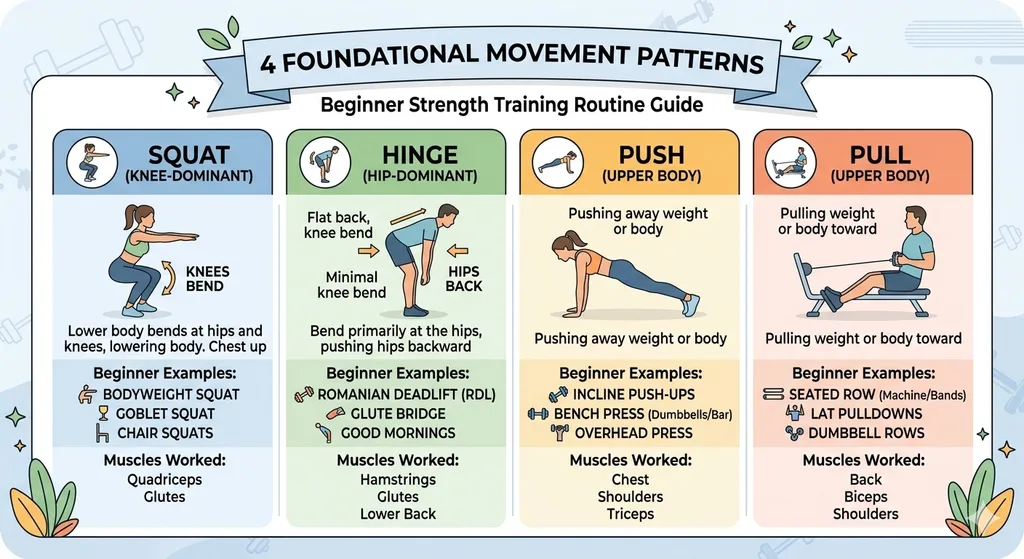
| Movement Pattern | Example Exercises |
|---|---|
| Upper Push | Push-ups, dumbbell bench press, overhead press |
| Upper Pull | Rows, lat pulldowns, assisted pull-ups |
| Lower Push | Squats, lunges, split squats |
| Lower Pull | Deadlifts, Romanian deadlifts, glute bridges |
| Core | Planks, dead bugs |
Once this feels manageable and recovery isn’t an issue, you can progress to an upper/lower split or a push/pull/legs split — but there’s no rush to get there.
Why Form Comes Before Weight
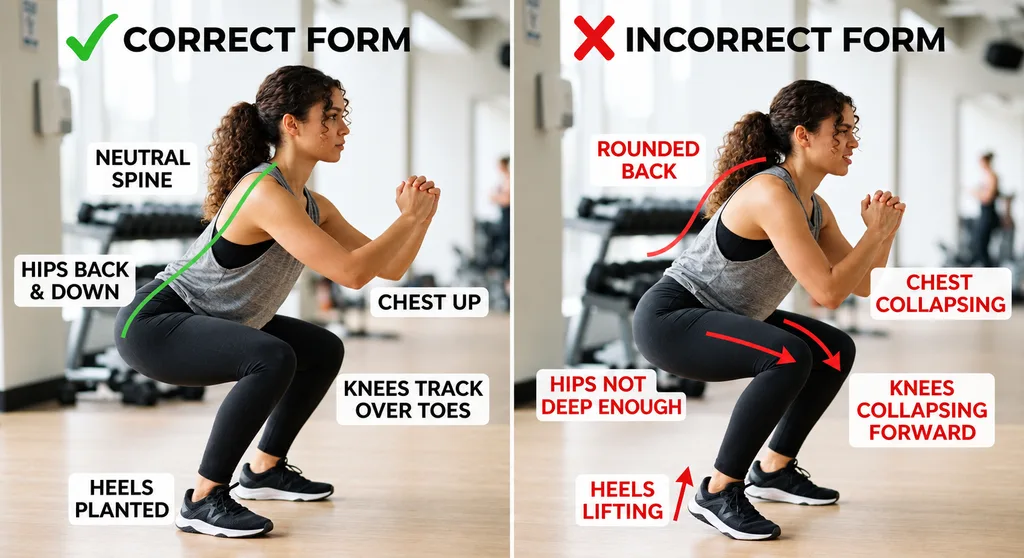
Proper form is the foundation everything else builds on. Even light weights done with poor technique can cause injuries and blunt your results, while good form makes sure you’re actually targeting the right muscles.
Practical Ways to Lock In Form Early
- Master squats, deadlifts, and presses with just your bodyweight or light resistance before adding load
- Train in front of a mirror to check posture and alignment
- Watch instructional videos or work with a trainer for your first few sessions on the “big” lifts
- Perform each rep slowly and under control — rushing reps is one of the most common beginner mistakes
One often-missed detail: many coaches actually recommend holding off on heavy barbell squats, deadlifts, and bench presses in your very first weeks, since poor form on these specific lifts carries the highest injury risk. Build competence on lighter variations first, then progress into the full versions once your movement pattern is solid.
Applying Progressive Overload Without Wrecking Your Form
Progressive overload is how you keep making gains — but it only works if form stays intact while you push. Here’s how to apply it safely as a beginner:
- Add reps first. Once you can comfortably hit the top of your rep range with good form, that’s your cue to progress.
- Then add small amounts of weight. A 2.5-5% increase once you’ve maxed out your rep range keeps form intact.
- Track your sessions. Write down weights and reps — memory is unreliable, and progress you can’t see is progress you can’t repeat.
- Never sacrifice form for load. If your technique breaks down, that’s your actual working weight — not the number you managed to grind out.
Progressive overload works hand-in-hand with your nutrition too — if you haven’t already, check out our guide on muscle building tips for beginners for the eating side of this equation.
Common Beginner Mistakes in Splits, Form & Progression
- Starting with a 5-6 day bro-split before building a base of full-body training
- Skipping the “boring” bodyweight or light-load phase to jump straight to heavy barbell lifts
- Adding weight every session regardless of whether form holds up
- Never tracking numbers, so progress becomes guesswork
- Copying advanced lifters’ routines instead of following a beginner-appropriate structure
How Long Before You Can Move to a Split Routine?
Most beginners can comfortably transition from full-body training to an upper/lower or push/pull/legs split after 8-12 weeks of consistent training, once basic movement patterns feel natural and recovery between full-body sessions starts to feel too easy.
Frequently Asked Questions
Is a full-body routine really enough for beginners?
Yes. Training each muscle group 2-3 times a week through full-body sessions builds strength and muscle just as effectively as a split for beginners — and it teaches proper movement patterns faster.
How many days a week should a beginner train?
2-3 full-body sessions per week is ideal for most beginners, leaving enough recovery time between sessions.
When should I switch from full-body to a split routine?
Typically after 8-12 weeks of consistent training, once your form feels automatic and full-body sessions start feeling too easy to provide enough stimulus.
Should beginners avoid barbell squats and deadlifts completely?
Not completely — but many coaches recommend starting with lighter variations or bodyweight versions first, then progressing to full barbell lifts once your form is solid.
Final Word
A good beginner strength training routine isn’t about the fanciest split — it’s full-body training built on solid form, with progressive overload added carefully once technique is locked in. Master that sequence, and moving to more advanced splits later becomes a natural next step instead of a setback waiting to happen.
Got a question about your current routine or form on a specific lift? Drop it in the comments — or subscribe for the next guide in this series.
Sources: Find Your Edge on full-body vs. split training, BlenderBottle on form fundamentals, Mind Pump on movement-pattern programming.