
Getting 100g protein a day sounds difficult when you imagine eating chicken, paneer, and protein shakes all day.
It really does not have to be.
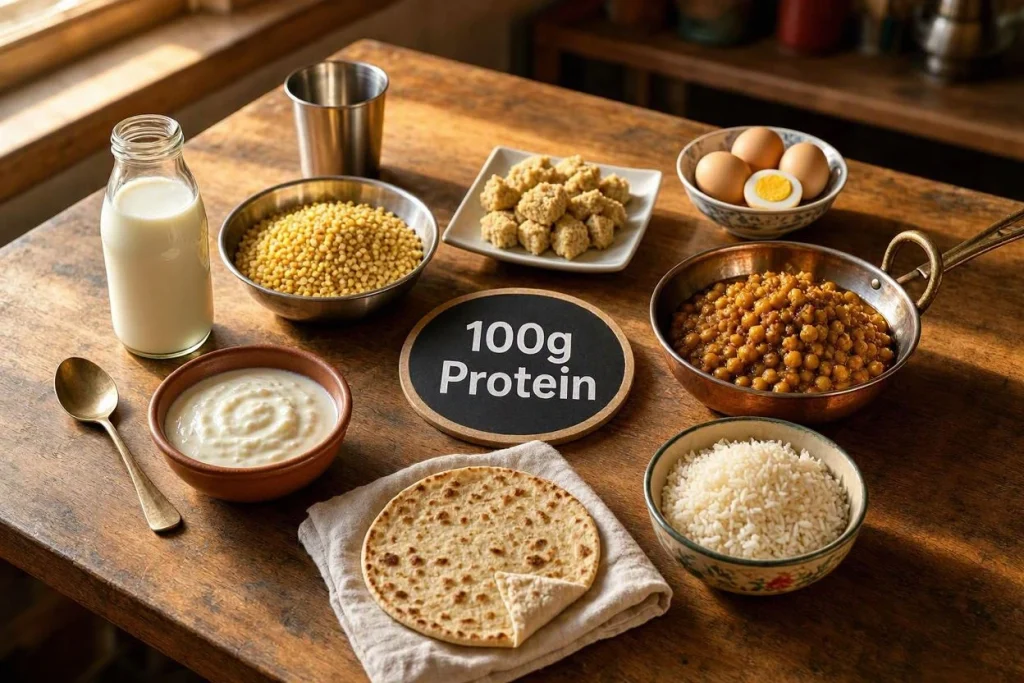
With normal Indian foods such as eggs, milk, dal, curd, soy chunks, roti, rice and chana, you can build a high-protein day without turning your grocery bill into a gym membership of its own.
The important part is understanding that 100g of protein is a practical target, not a magic number for everyone. Your ideal protein intake depends on your body weight, training, and goal. A large meta-analysis found that muscle-building benefits from protein tend to level off around 1.6 g per kg of body weight per day during resistance training. (Read the research on PubMed)
So use 100g as an example, not a rule carved in stone.
Is 100g Protein a Day Enough?
Whether 100 g is appropriate depends on your body weight. That amount may be enough for some people, while others may need more or less.
As a reference, 100 g of protein equals:
- 1.67 g/kg for someone weighing 60 kg
- 1.43 g/kg for someone weighing 70 kg
- 1.25 g/kg for someone weighing 80 kg
- 1.11 g/kg for someone weighing 90 kg
That is why body weight matters.
If you are serious about muscle growth, use your own body weight rather than blindly copying someone else’s target. Our SUPERASTIK Protein Intake Calculator can give you a more personalized starting point.
At the same time, you do not need to obsess over hitting exactly 100 g every single day. Being reasonably consistent is more useful than panicking over a few grams.
How to Get 100g Protein a Day With Indian Food
The easiest method is to divide your protein across the day instead of trying to eat 100 g in one sitting.
Think roughly:
Breakfast: 25–30 g
Lunch: 20–25 g
Snack: 15–20 g
Dinner: 25–30 g
That already gets you very close to the target.
The ICMR-NIN Dietary Guidelines for Indians also highlight pulses, eggs, milk, meat, soy foods, nuts and seeds as protein sources, while noting the importance of pulses in vegetarian Indian diets.
A Realistic 100g Protein Indian Meal Plan
Here is one example using foods that are easy to find in India.
Breakfast: Eggs, Roti and Milk
Meal:
- 3 whole eggs
- 2 rotis
- 500 ml milk
This gives you a strong protein start without needing a protein powder.
Eggs and milk are also easy to prepare, which makes this meal practical for busy mornings.
Estimated protein: around 40 g
Approx. cost: roughly ₹45–60, depending on local prices and the milk brand.
Lunch: Dal, Rice and Curd
Meal:
- 1 large bowl of dal
- 1 serving of rice
- 200 g curd
- Vegetables
This is where a basic Indian lunch becomes more useful for muscle building.
Dal contributes protein and fibre, while curd adds another protein source. Also, rice gives you carbohydrates to support your overall energy intake.
The ICMR-NIN guidelines specifically discuss pulses as important protein sources and explain how combining cereals with pulses can improve the protein quality of a vegetarian diet.
Estimated protein: around 20–25 g
Approx. cost: roughly ₹35–50
Evening Snack: Roasted Chana and Milk
Instead of reaching for an expensive protein bar, try something much simpler.
Meal:
- 40–50 g roasted chana
- 250 ml milk
- 1 banana
The snack is cheap, portable and requires almost no preparation.
Because the goal is to reach your daily total, small protein contributions throughout the day can make the final number much easier to hit.
Estimated protein: around 15–18 g
Approx. cost: roughly ₹25–35
Dinner: Soy Chunk Roti Bowl
Soy chunks are especially useful when you are trying to increase protein without spending heavily.
FSSAI standards for textured soy protein specify a minimum of 50% protein on a dry-matter basis, making soy chunks a very concentrated plant-protein option. (FSSAI food standards)
Meal:
- 40 g dry soy chunks
- 2 rotis
- Mixed vegetables
- Onion and tomato
Cook the soy chunks with spices and vegetables, then serve them with roti.
Estimated protein: around 25–30 g
Approx. cost: roughly ₹30–45
100g Protein a Day: The Full-Day Breakdown
Here is what the example day looks like:
| Meal | Approx. protein |
|---|---|
| 3 eggs + 2 rotis + 500 ml milk | ~40 g |
| Dal + rice + 200 g curd | ~20–25 g |
| Roasted chana + milk + banana | ~15–18 g |
| Soy chunks + 2 rotis + vegetables | ~25–30 g |
| Daily total | ~100–113 g |
The numbers are estimates because portion sizes, recipes and brands vary.
That is actually a good thing.
You do not need to hit exactly 100.0 g every day. Landing somewhere around your target is perfectly practical.
How to Make 100g Protein Cheaper
The biggest mistake is thinking that every gram of protein needs to come from expensive foods.
Instead, build your grocery list around foods that give you good protein for the money.
Use Eggs Regularly
Eggs are versatile and easy to add to breakfast, lunch or dinner.
Keep Dal in Your Regular Rotation
Dal is one of the easiest ways to add protein to meals that you were probably already eating anyway.
Buy Soy Chunks
They are inexpensive, easy to store and can dramatically increase the protein content of a rice or roti meal.
Use Milk and Curd
Both can quietly add protein without requiring another complicated recipe.
Treat Chicken and Paneer as Options, Not Requirements
Chicken and paneer are useful, but you do not need to build every meal around them.
In fact, the ICMR-NIN guidelines note that pulses can be a less expensive protein source than meat, eggs, or milk.
What About Protein Powder?
Protein powder can make reaching your target easier, but it is not mandatory.
If your meals already provide enough protein, there is no reason to force a shake into your diet simply because you train.
On the other hand, whey can be convenient when your schedule is busy or your appetite is low.
Our Whey, Creatine & Pre-Workout Explained guide covers when supplements actually make sense.
The basic principle is simple:
Food first. Convenience second.
What If You Cannot Reach 100g Every Day?
Do not turn protein tracking into another source of stress.
If you usually eat 85–90 g and your target is around 100 g, you are already much closer than someone eating 40 g.
Add one simple protein source.
For example:
2 eggs can add roughly another 12–13 g.
Or:
250 ml milk can add around 8 g.
Or:
A serving of curd or roasted chana can push the number a little higher.
Small changes are often easier to maintain than completely rebuilding your diet.
And remember, muscle gain depends on more than protein. Your resistance-training routine, calorie intake and recovery matter too. For the training side, check out our Beginner Strength Training Routine.
Common Mistakes When Trying to Hit 100g Protein
Eating All Your Protein at Night
Spreading protein across several meals is a much easier way to manage your target.
Depending Only on Supplements
A shake is convenient, but it should not become your entire diet.
Forgetting About Calories
If you are trying to gain muscle, getting enough protein is only one part of the equation.
Buying Expensive “Fitness Foods”
A normal Indian grocery basket can already provide plenty of useful protein sources.
Treating 100g as a Universal Rule
Your ideal target depends on body weight, training, and goal.
For someone who weighs 90 kg, 100 g may be a very different target than it is for someone weighing 55 kg.
FAQ About 100g Protein a Day
Can I get 100g protein a day without whey?
Yes. Eggs, milk, curd, dal, soy chunks, chana, chicken, paneer, and other regular foods can help you reach the target.
Is 100g protein enough to build muscle?
It depends on your body weight and overall diet. For example, 100 g is 1.43 g/kg for a 70 kg person but only 1.11 g/kg for a 90 kg person.
What is the cheapest way to get 100g protein in India?
There is no single cheapest food for everyone, but eggs, dal, soy chunks, milk, curd and chana are practical budget-friendly choices.
Can vegetarians reach 100g protein?
Yes. A varied vegetarian diet can provide substantial protein through pulses, soy foods, dairy, grains, nuts and seeds. The ICMR-NIN Dietary Guidelines discuss these protein sources in the context of Indian diets.
Do I need exactly 100g every day?
No. A target is useful for planning, but being slightly above or below it on a given day is not a problem.
Is 100g protein enough for bulking?
It may be enough for some people and too little for others. Your body weight and total calorie intake matter, so use a body-weight-based target rather than blindly choosing 100 g.
Final Takeaway
Getting 100g protein a day in India does not require an expensive bodybuilding diet.
A simple combination of eggs, milk, dal, curd, soy chunks, chana, rice and roti can get you surprisingly close to the target.
The bigger lesson is to build your meals around foods you can actually afford and eat consistently.
You do not need chicken at every meal.
You do not need whey every day.
And you definitely do not need a refrigerator full of “fitness foods.”
Start with your regular Indian kitchen, spread your protein across the day, and adjust your portions according to your body weight and goal.
Eat smart. Spend smart. Train hard.